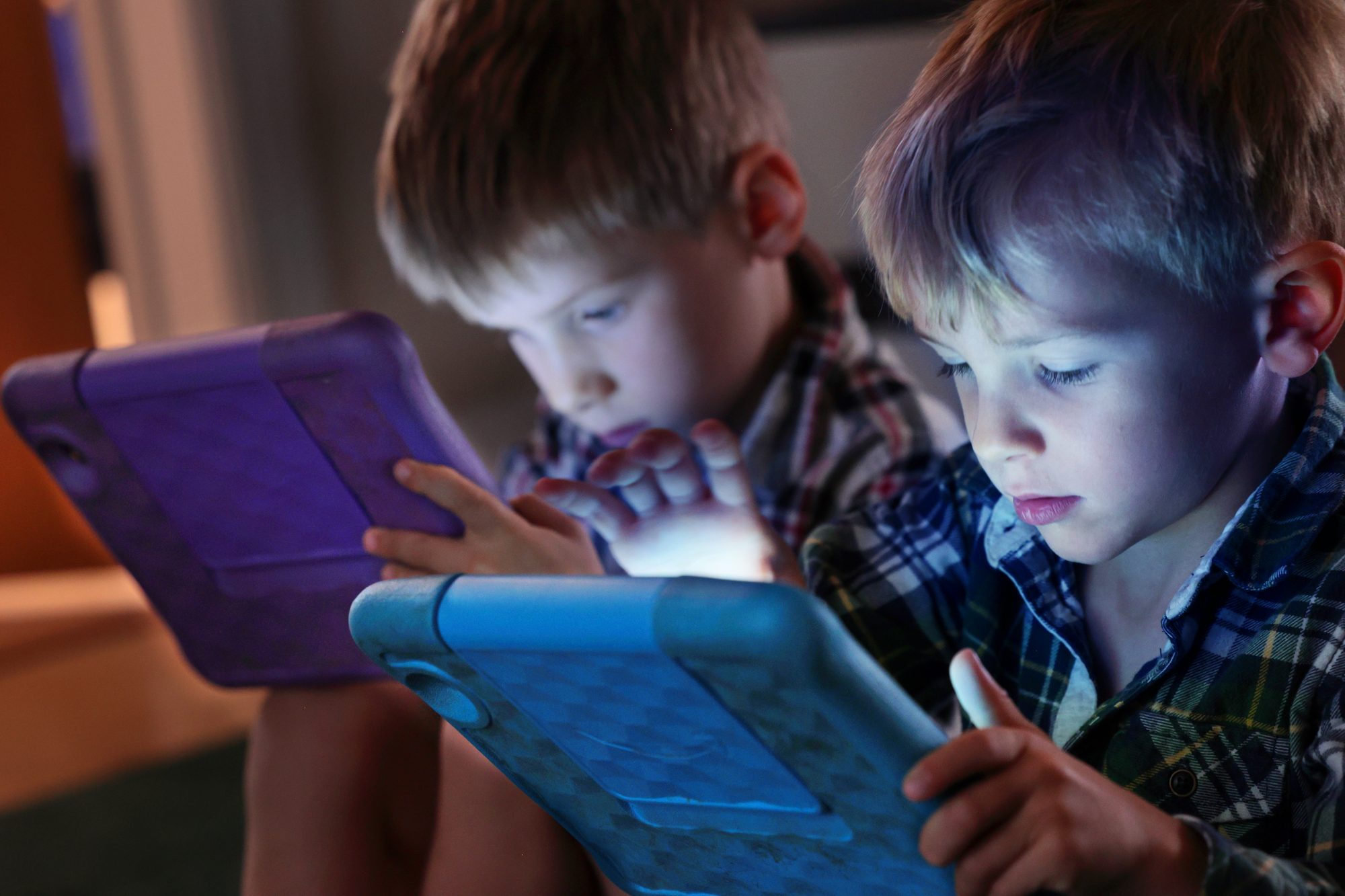
More than 300 Solana Beach School District parents want fewer iPads in their children's classrooms. The district isn't ready to set hard time limits.
The local chapter of Schools Beyond Screens, a national parent coalition, delivered a petition over the summer asking the district to eliminate devices for its youngest students, cap screen time by grade level and replace its K-6 one-to-one iPad program with shared laptop carts and computer labs for grades 2 through 5.
At the board's Aug. 13 meeting, district leaders responded with what they call a "screen value, not screen time" framework. Rather than imposing minute-per-day caps, the district will measure whether technology deepens learning, increases access or enables something instructionally meaningful, according to the San Diego Union-Tribune.
Casey Doose, the district's new director of instructional services and educational technology, said the commitment is to promoting technology use that is intentional, not a default, reward or substitution for strong instruction. Doose, who brings more than 25 years in education most recently at Oceanside Unified, said teachers follow the SAMR Model for technology integration. The goal: avoid simple substitution, like typing an essay instead of handwriting it, and instead use devices to open new opportunities such as collaborative peer editing or publishing student writing to outside audiences.
Associate Superintendent Sabrina Lee called 2026-27 "a year of ongoing learning," signaling the district will continue gathering usage data and teacher and family feedback rather than adopting firm grade-level limits.
Parents and students speak up
During public comment, Tom Kornecook, a Solana Santa Fe School parent with a PhD in neuroscience, argued that digital platforms promote superficial learning and encourage skimming, clicking and task switching. He called the petition "not an anti-technology argument" but "a pro-learning argument."
Parent Erica Carlin raised an equity concern: on district-issued iPads, students see pop-ups for paid memberships to the math game Prodigy, ranging from $9.95 to $19.95 a month. Carlin noted that 14% of the district's students are socioeconomically disadvantaged.
Skyline School students Lucia and Shanti told the board they prefer learning by playing real games with friends, creating their own art and getting help from teachers. "We would rather work with real people than with devices," they said.
Schade: youngest students 'probably don't need' devices
Board Vice President Debra Schade, who also serves as president of the California School Boards Association, said students in transitional kindergarten through second grade "probably don't need to be on a device" but should be building skills so they are ready for device use by third grade.
Other California districts
The petition arrives amid a wave of screen-time action across the state. Los Angeles Unified banned classroom screen time before second grade starting with the 2026-27 school year and set daily limits for older students. San Diego Unified passed a resolution in June prohibiting video streaming and non-instructional gaming on student devices and removing computer carts from transitional kindergarten classrooms.
Closer to home, the San Dieguito Union High School District, which serves Solana Beach students after sixth grade, discussed intentional Chromebook use at its May 21 board meeting.
The Solana Beach district's next steps remain incremental. No vote was taken at the Aug. 13 meeting, and the board has not scheduled a formal action item on screen-time policy.